Why ChatGPT Recommends Your Competitor (and What to Fix First)

The short answer
You asked ChatGPT the question your best customer would ask, and it named two rivals instead of you. That is rarely a verdict on your product. When ChatGPT searches the web, it can only cite pages it is allowed to read. When it doesn't search, it leans on what it already learned. Brands tend to get named when their own site says plainly what they sell and for whom, other sites describe them the same way, and their pages answer real buyer questions. You can check all of this in an afternoon. Last checked: November 5, 2026.
Why does ChatGPT name your competitor and not you?
Usually because your competitor is easier for the AI to find, read and describe, not because it is better. Neither OpenAI nor Google publishes a formula for which brands an assistant recommends, so treat any list of "ChatGPT ranking factors," including ours below, as a checklist, not a law.
Google's guide, Optimizing your website for generative AI features on Google Search (updated July 10, 2026), says its AI Overviews and AI Mode are rooted in its core Search ranking and quality systems. The basics still decide a lot.
Also, answers vary. The same question asked twice, or in another tool, can name different brands, so one test proves little.
Where does ChatGPT get its answer from?
It answers in one of two ways: from what the model learned in training, or by searching the web for this question and reading pages live.
| How it answers | Where the answer comes from | What you can influence |
|---|---|---|
| From memory | What the model learned during training | How your brand has been described across the web over time |
| With search | Web pages fetched for this question, often shown as sources | Whether your pages can be crawled, and what they say today |
On search, OpenAI's Overview of OpenAI Crawlers is clear. OAI-SearchBot is the crawler used to surface websites in ChatGPT's search features, and sites that opt out of it "will not be shown in ChatGPT search answers." GPTBot is a separate crawler for training data. The two settings are independent.
Google's page AI features and your website explains that AI Overviews and AI Mode may use "query fan-out," running several related searches across subtopics to build one answer. One buyer question can pull in pages about comparisons and fit, not just your homepage.

Why it matters: a Pew Research Center study (July 22, 2025), based on the browsing data of 900 US adults in March 2025, found that Google users who saw an AI summary clicked a traditional result link in 8% of visits, compared with 15% when no summary appeared. They clicked a link inside the summary in just 1% of visits. When fewer people scroll past the answer, being named in it counts for more.
Does your website say what you sell, who it's for, and why you?
If an AI cannot repeat your positioning in one line, it will struggle to recommend you. Start with the first two lines of your homepage and of each product or service page.
Here is a made-up example to show the difference:
- Vague: "Elevating everyday rituals."
- Clear: "Fragrance-free skincare for sensitive skin, made in small batches."
The second line says what and for whom, in words a buyer would type. Google's guide pushes the same way: create "non-commodity" content with expert or first-hand takes that go beyond common knowledge.
A five-minute test
Ask ChatGPT: "In one sentence, what does [your brand] sell, and who is it for?" A vague or wrong answer means your site isn't saying it clearly enough.
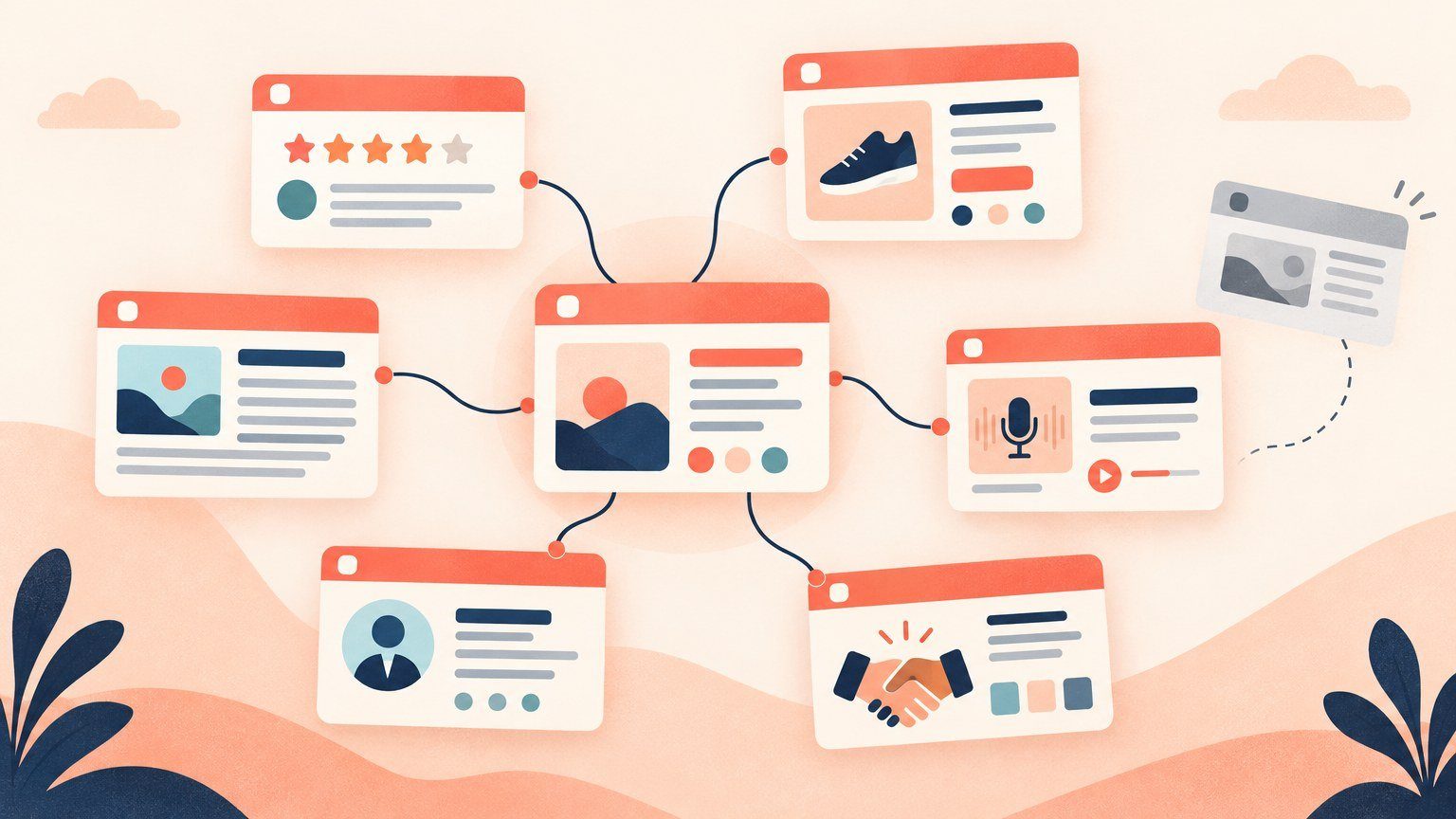
Do other sites describe you the same way?
They should, because AI tools look beyond your site. Google's guide notes that its generative AI features "can show what's being said about products and services across the web, including in blogs, videos, and forum discussions."
Make sure your name, category and one-line description match everywhere buyers look. Good places to start:
- D2C brands: marketplace listings, product review sites, gift guides and roundups.
- SaaS companies: software review and comparison sites, integration partner pages, industry newsletters and podcasts.
- Clinic or studio groups: professional directories, booking platforms and practitioner profiles.
One warning: don't buy your way in. The same guide says seeking inauthentic "mentions" isn't as helpful as it might seem. Earn them through real partners, press and customers.
Can AI tools actually read your website?
Not always, and it is often an accident. Open yourdomain.com/robots.txt and look for "User-agent: OAI-SearchBot" or "User-agent: *" followed by "Disallow: /". Either can keep you out of ChatGPT's search answers. After you fix it, OpenAI says it can take about 24 hours for its search systems to adjust.
A few more checks:
- Key facts in plain text. Put what you sell and who it's for in page text, not only inside images or sliders.
- Indexed and snippet-eligible. Google's guide says a page must be indexed and eligible to show with a snippet to appear in its AI features. Settings like noindex or nosnippet limit that.
- Skip the hacks. Google says you can ignore tactics like creating AI text files such as llms.txt, and no special schema.org markup is needed for its AI features.
Does your content answer the questions buyers ask AI?
It should, in your buyers' own words. Pull real questions from sales calls, support tickets and DMs, for example:
- "Which payroll software works for a 20-person team?"
- "What is the best skincare brand for sensitive skin?"
- "What is the difference between [your category] and [the alternative]?"
Answer them on product pages, an FAQ, comparison pages and a "who it's for" page. Don't mass-produce a page for every variation: Google warns that doing so mainly to manipulate rankings or AI responses violates its scaled content abuse spam policy.
How do you check where you stand today?
Run a repeatable test and compare yourself with the brands that get named.
| Signal | What your competitor probably has | How to check in 5 minutes | Fix first |
|---|---|---|---|
| Clear positioning | A homepage that says what, for whom, why | Ask ChatGPT to describe your brand in one sentence | Rewrite your first two homepage lines |
| Consistent details | The same name and description everywhere | Compare your top 5 profiles side by side | Align every profile to one line |
| Specific reviews | Reviews that mention use cases | Read your 10 latest reviews | Ask happy customers what problem you solved |
| Mentions on other sites | Roundups, partner pages, press | Search your brand name plus your category | Pitch one real roundup or partner page |
| Answers to buyer questions | FAQ and comparison pages | Search your site for your top 3 sales questions | Publish one strong answer page |
| Crawlability | Open robots.txt, indexed pages | Read your robots.txt | Allow OAI-SearchBot and Googlebot |
Your prompt test checklist
- Write 6 to 9 buyer questions across discovery, comparison and decision.
- Run each in ChatGPT, Gemini, Perplexity and Google, 2 to 3 times.
- Log the date, tool, brands named and sources cited.
- Repeat monthly and compare.
For Google, Search Console's Generative AI performance report shows how you perform in its AI features. Google also warns to be wary of third-party tools promising ranking success.
Can this work move the needle? The research paper GEO: Generative Engine Optimization (Aggarwal et al., KDD 2024) reports visibility gains of "up to 40%" in generative engine responses on its benchmark. That is a research result, not a promise, and results varied by domain.
FAQ
Can I pay ChatGPT to recommend my brand?
No. ChatGPT now shows ads to some users, but OpenAI's help page Ads in ChatGPT says ads do not influence ChatGPT's answers, run on separate systems from the chat model, and are clearly labeled. Paying buys an ad, not a recommendation.
Does blocking GPTBot stop ChatGPT from recommending me?
Not in ChatGPT search. GPTBot controls whether your content may be used for training. OAI-SearchBot is the setting that decides whether your site can be shown in ChatGPT's search answers.
How long after fixing my site will ChatGPT notice?
For robots.txt changes, OpenAI says about 24 hours for its search systems. For content changes, neither OpenAI nor Google publishes a timeline, so re-test after about 30 days.
Do bigger brands always win in AI answers?
No. Big brands are written about more, which helps, but nothing in OpenAI's or Google's guidance says size is required. Clear positioning, consistent descriptions and real answers are within reach of any growing brand.
Is this different for Google AI Overviews?
Mostly not. Google says there are no additional requirements to appear in AI Overviews or AI Mode beyond regular Search best practices. Your page needs to be indexed and snippet-eligible, and Googlebot's robots.txt rules are the control.
What to do this week
- Run the prompt test above across four tools and log what you see.
- Fix the weakest row in the diagnostic table first.
- Re-test in 30 days and compare.
Keep reading
How to Get Recommended by ChatGPT: A 30-Day Plan for Growing Brands
A week-by-week, 30-day plan for growing brands that want ChatGPT to name them: baseline test, positioning, buyer-question pages, mentions and feeds.
Read the guide →
Generative Engine Optimization: 7 Myths Growing Brands Can Drop
What generative engine optimization is, 7 myths that waste a growing team's time, and what to do first, with Google's and OpenAI's own guidance.
Read the guide →