How to Get Recommended by ChatGPT: A 30-Day Plan for Growing Brands
The short answer
You can't buy or request a ChatGPT recommendation, but you can make your brand easy for ChatGPT to find, read and trust in about 30 days of focused work. Let ChatGPT's search crawler in, describe what you sell and for whom in plain words, repeat that description everywhere your brand appears, publish clear answers to buyer questions, earn genuine mentions, and (for product brands) share a product feed. Test before and after, because answers change from run to run.
Last checked: November 6, 2026.
What does the whole 30-day plan look like?
Four weeks, one focus each. Every task has a "done when" test, so you know when to move on.
| Week | Focus | Done when | Source |
|---|---|---|---|
| 1 (Days 1-7) | Baseline test and crawler check | 10 buyer questions logged, robots.txt allows OAI-SearchBot | OpenAI's crawler docs |
| 2 (Days 8-14) | One positioning line, used everywhere | Homepage and top profiles say the same thing | Google's guide |
| 3 (Days 15-21) | Pages that answer buyer questions | 5 questions answered on your own pages, plus a "who we're for" page | Google's guide |
| 4 (Days 22-30) | Mentions, product feed, re-test | PR pitches sent, feed applied for (product brands), test repeated | OpenAI's merchants page |
Can ads in ChatGPT buy you a place in the answer?
No. OpenAI says ads do not influence ChatGPT's answers and that advertisers have no ability to shape, rank or alter its responses (OpenAI Help Center, "Ads in ChatGPT"). Ads do exist: they are labeled, shown separately below a response, and appear for users on the Free and Go plans. OpenAI lists "answer independence" as one of its ads principles.
So an ad can put your brand next to the answer. It cannot put you inside it. The only route into the answer itself is the slower one below.
Week 1: Where does your brand stand in ChatGPT today?
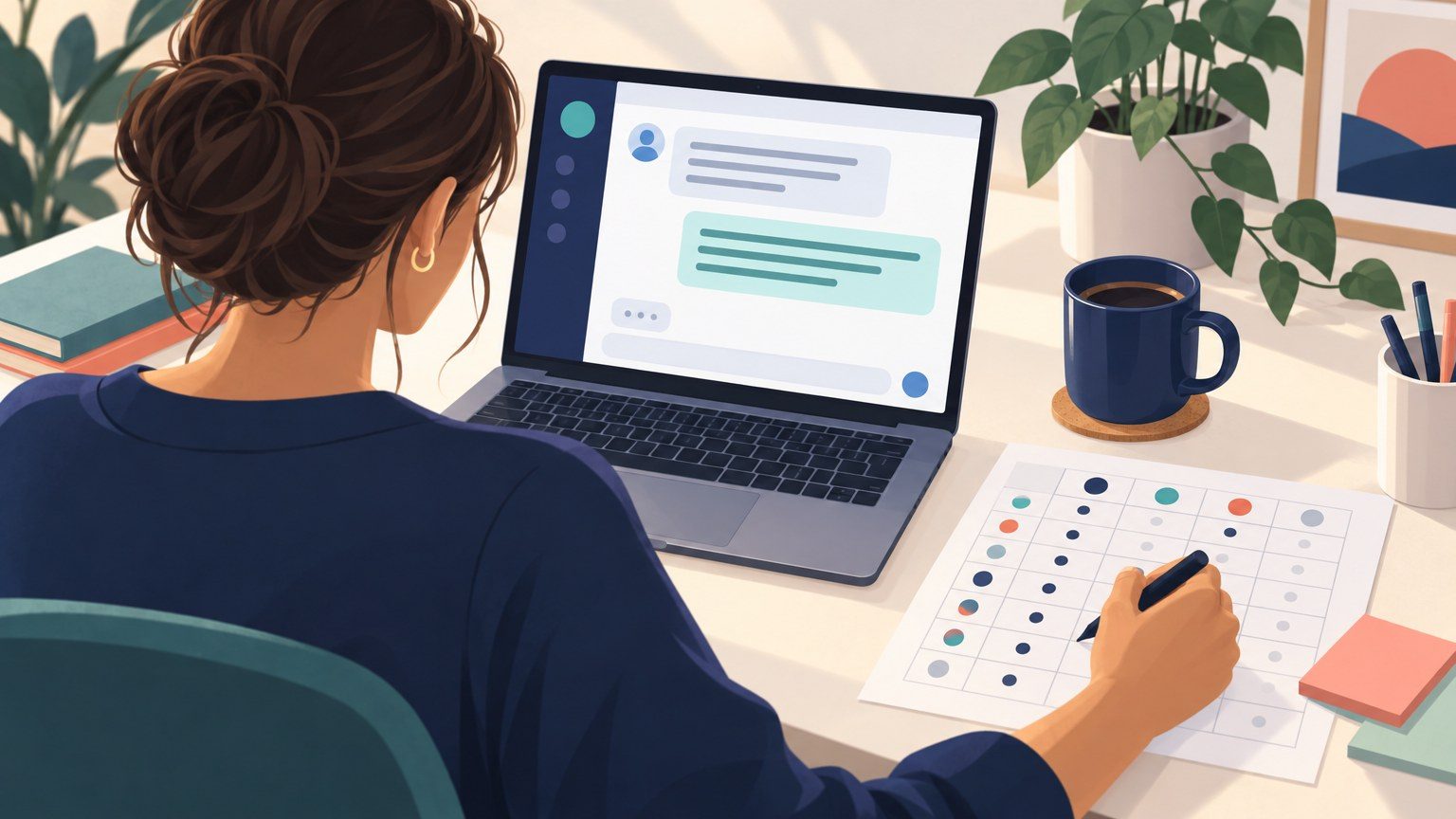
You find out by asking ChatGPT the questions your buyers ask, before you change anything.
- Day 1. Write 10 questions a buyer types before they've heard of you. Mix three kinds: discovery ("best skincare brand for sensitive skin"), comparison ("[competitor] vs alternatives") and decision ("is [category] worth it for a 20-person team").
- Days 2 to 5. Run each question in ChatGPT with search on, three times each, in a fresh chat. Answers vary run to run, so one try tells you little.
- Day 6. Check your robots.txt file.
- Day 7. Write down your baseline: how often you were named, who was named instead, and which sites were cited.
The log that makes Week 4 meaningful
Use one row per question and one column per run. Record three things: brands named, sites cited, and whether you appeared. Skip prompts like "is [my brand] good?" as your only test. They tell you what ChatGPT says when someone already knows your name, which is not the moment you're trying to win.
One robots.txt line can hide you
OpenAI uses a crawler called OAI-SearchBot to surface websites in ChatGPT's search features. Per OpenAI's crawler docs, sites that opt out of OAI-SearchBot won't be shown in ChatGPT search answers. GPTBot is a separate setting for model training, and you can allow one while blocking the other. If you change the file, OpenAI says it can take about 24 hours for its systems to adjust.
Week 2: How do you make ChatGPT understand what you sell?
You write one plain sentence about what you sell, for whom, and why you, then put it everywhere.
- Days 8 to 10. Draft the line and put it on your homepage, top product or service pages, and About page.
- Days 11 to 14. Copy the same line, word for word where possible, into LinkedIn, marketplace listings, review sites and industry directories.
A sentence a machine can repeat
Illustrative example (not a real brand): "Fragrance-free skincare for adults with sensitive skin, made in small batches and tested with dermatologists." A service version: "Bookkeeping for SaaS companies with 10 to 50 staff, including month-end close and investor reporting."
Vague lines like "we make life better" give an AI tool nothing to match against a buyer's question. Google's guide puts it simply: create helpful, reliable, people-first content.
Week 3: What content gets brands cited in AI answers?
Pages that answer real buyer questions with detail only you can give.
- Days 15 to 17. Collect questions from sales calls, support tickets, DMs and reviews. The phrasing customers use is the phrasing they type.
- Days 18 to 20. Answer five of them on your own product or service pages. Lead each answer with the answer.
- Day 21. Publish an honest "who we're for, and who we're not for" page.
Proof beats polish
Google's guide says a unique point of view stands out, for example a first-hand review over a summary of what's already out there. Show your process, materials, specs and outcomes you can document. The same guide warns that mass-producing pages for every search variation to manipulate AI responses violates Google's scaled content abuse policy. A few honest pages beat a pile of thin ones.
In the original research on generative engine optimization, the authors report that content changes boosted visibility "by up to 40%" on their test benchmark (Aggarwal et al., KDD 2024). Treat that as a research result, not a promise.
Week 4: How do you get other sites to mention you?
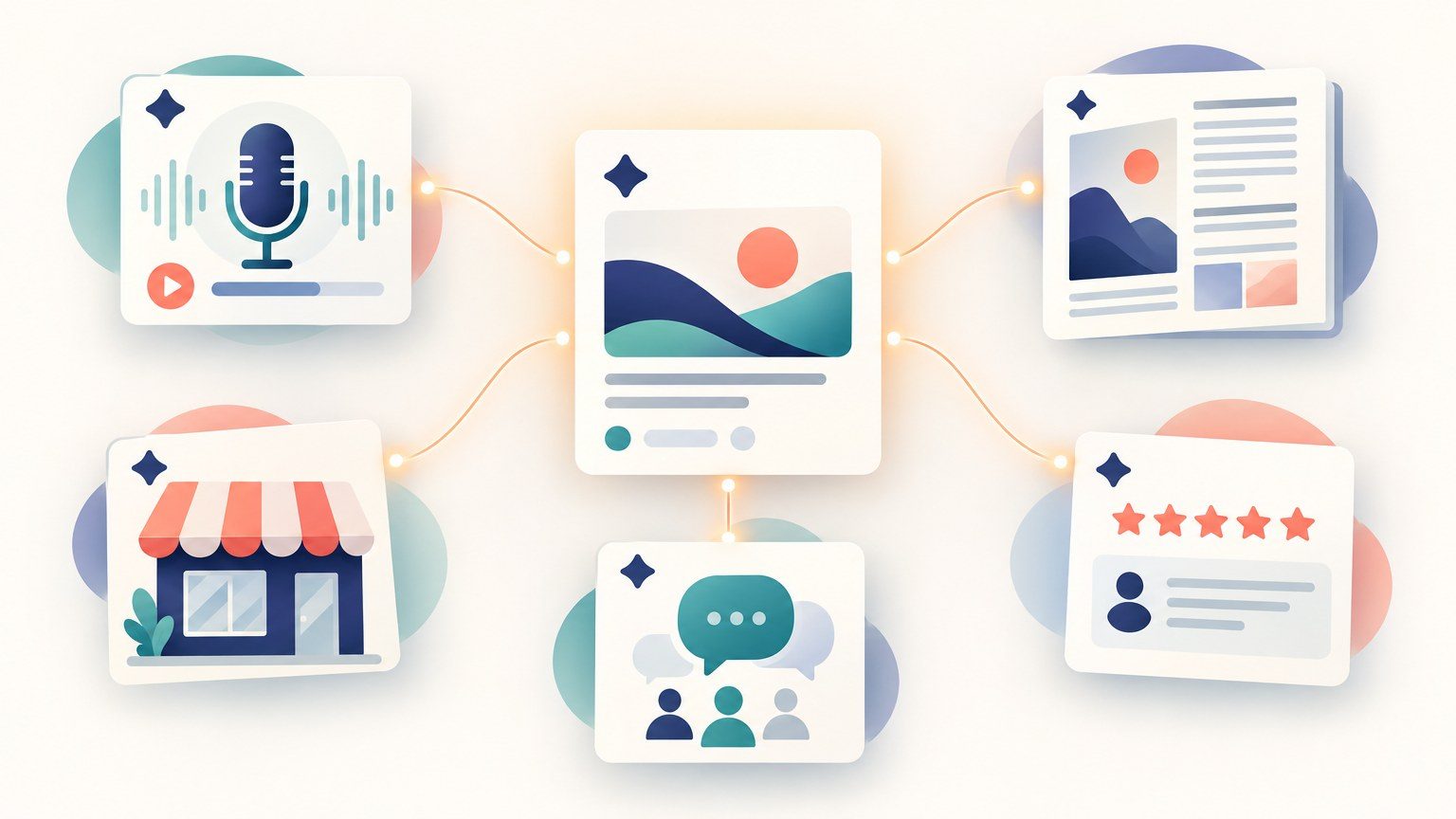
You earn mentions where your buyers already read and ask: industry roundups, partner and supplier pages, podcasts, newsletters and communities.
- Days 22 to 25. List 15 places that already write about your category. Pitch the ones where you have something real to add.
- Days 26 to 28. Answer questions in two communities your buyers use. Help first, link only when it's the answer.
- Days 29 to 30. Re-run your Week 1 questions three times each and compare.
Three lines that get a reply
"Saw your roundup of [category] tools. We're [your one-line positioning]. Happy to send specs or a sample if it's useful for your next update."
Google's guide notes that its AI features can show what's said about products and services across blogs, videos and forum discussions, and that seeking inauthentic mentions isn't as helpful as it might seem. Paid link schemes and fake reviews are out.
Do product brands need to share a product feed with ChatGPT?
Not strictly, but it gives you more control. OpenAI's merchants page says merchants can share a product feed so products appear in ChatGPT shopping results, and that richer data helps products surface with more accurate information when shoppers compare options.
Feed fields the page calls out
- Images
- Pricing
- Reviews
- Availability, kept in sync with your store
The page also says there are no fees on purchases that start in ChatGPT, that Shopify and Etsy catalogs are already integrated, and that shopping is live for users in the U.S. Other merchants apply through a form on that page. Check it on the day you apply, since the program is changing.
How long does it take to get recommended by ChatGPT?
Nobody can promise a timeline. OpenAI's crawler docs give one timing: about 24 hours for ChatGPT search to adjust after a robots.txt change. Positioning, content and mentions take longer and vary by category. Re-run your question log every month and keep what moves the needle. If you'd like a team on it, see how our AI visibility work runs.
What do founders ask before starting this plan?
Does ChatGPT give every user the same list of brands?
No. Answers vary between runs, and OpenAI's merchants page says shopping results are tailored to each shopper based on preferences and context. That's why the plan tests each question three times.
Will this plan also help on Gemini and Perplexity?
Mostly, yes. Clear positioning, useful pages and genuine mentions help any tool that reads the web. Each tool has its own crawler rules, so check their documentation.
If I opt out of model training, do I vanish from ChatGPT search?
Not if you set it up right. OpenAI's crawler docs treat GPTBot (training) and OAI-SearchBot (search) as independent settings. You can disallow the first and allow the second.
Will an llms.txt file get my brand recommended?
Don't count on it. Google's guide says Google Search ignores llms.txt files. OpenAI hasn't said ChatGPT uses them to choose brands.
Can a newer brand show up next to the category leader?
It can. In our view, narrow questions ("for sensitive skin", "for 20-person teams") are the best shot for a focused brand, because it can give the clearest, most specific answer.
Your Day 1 move
Open a blank sheet, write 10 buyer questions, and run the first three in ChatGPT today. Everything else in this plan builds on that baseline. For the full picture, read about our AI visibility audit.
Keep reading

Why ChatGPT Recommends Your Competitor (and What to Fix First)
ChatGPT keeps naming your competitor? See where AI answers come from, six signals to check in an afternoon, and what to fix first.
Read the guide →
Generative Engine Optimization: 7 Myths Growing Brands Can Drop
What generative engine optimization is, 7 myths that waste a growing team's time, and what to do first, with Google's and OpenAI's own guidance.
Read the guide →